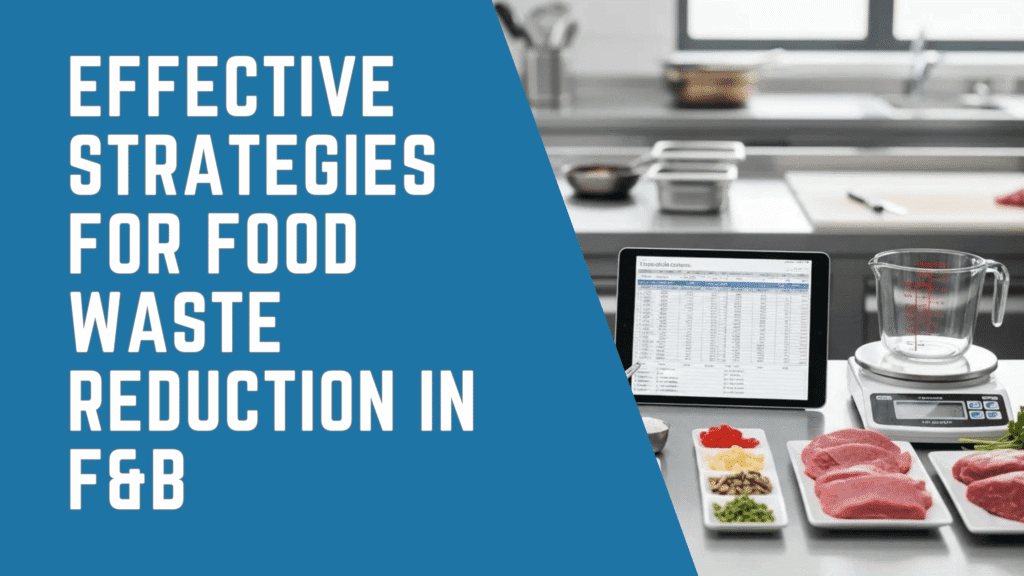
Shrinkage and waste are major profit drains in the food and beverage (F&B) sector, and food waste reduction plays a key role in fixing this problem. Finance teams are uniquely positioned to cut losses and lift margins by applying disciplined controls, clear measurement, and the right technology. This article outlines practical, finance-focused approaches, from measuring inventory shrinkage to embedding reporting and compliance, so teams can reduce financial leakage and strengthen the bottom line.
What Is Inventory Shrinkage and How Does It Impact Food and Beverage Finance?
Inventory shrinkage is the loss of stock from causes like theft, spoilage, overproduction, or simple admin mistakes. In F&B operations, shrinkage lowers gross margins and makes forecasting and cash management harder. In addition, finance teams need to find the root causes and measure the impact so they can build cost controls that protect profit and support stable operations.
Defining Inventory Shrinkage and Food Waste in F&B Context
In F&B, shrinkage covers both tangible inventory loss and avoidable waste. That includes overproduction, poor storage, and spoilage — each translating into lost revenue and, increasingly, environmental cost. Clear definitions let finance teams measure losses consistently and prioritize interventions that deliver the best financial return.
Financial Losses Caused by Shrinkage and Waste
The numbers make the case: many restaurants see shrinkage of roughly 4–5% a year, which can add up to substantial missed revenue. Studies and case examples show targeted waste‑management and control programs can cut losses by as much as 30%. Those results underline why proactive controls and measurement are essential for maintaining margins.
To illustrate how gaps appear in practice, the following case study highlights common breakdowns in controls.
Food Cost Control Strategies in F&B: A Hotel Case Study
This study examined causes of elevated food cost at Four Points by Sheraton Bali Ungasan in 2020 and identified practical control failures. Comparing standard versus actual food costs for January–December 2020 showed a variance of 4.03%. A qualitative triangulation analysis (Dittmer, Ojugo, Wiyasha) found weaknesses in purchasing (no standard purchase specifications or pricing), receiving (insufficient quality and quantity checks), and storage (inadequate handling and preservation practices). These gaps combined to drive the higher food cost.
Analysis of the Causes of High Food Costs and Food Cost Control Strategies at the Food and Beverage Product Department at the Four Points Hotel by Sheraton Bali, M Artajaya, 2020
How Can Finance Teams Measure and Track Shrinkage Accurately?
Accurate measurement is the foundation of any shrinkage reduction program. Finance teams should use repeatable counting methods and systems that surface discrepancies quickly so corrective action is timely and quantifiable.
Inventory Shrinkage Measurement Techniques and Tools
Common techniques include cycle counting, full physical inventories, and modern inventory management software. In addition, these approaches provide visibility into stock levels, reveal variances, and enable root-cause analysis. Furthermore, successful rollouts combine consistent procedures, staff training, and clear ownership for counts and reconciliations.
Conducting Waste Audits for Financial Reporting
Waste audits quantify where and why food is discarded. A structured audit — mapping waste streams, measuring volumes, and assigning costs — turns anecdotal issues into measurable KPIs. Beyond financial reporting, audits help prioritize operational fixes and sustainability initiatives that also reduce costs.
Best Practices for Food Waste Reduction and Shrinkage in Food and Beverage Operations
Reducing waste and shrinkage requires a mix of operational discipline, data, and people engagement. The following best practices help finance teams translate insight into sustained savings.
- Optimize Menu Design – Design menus around demand and ingredient overlap to reduce overproduction and simplify purchasing.
- Implement Portion Control – Standardized portions and recipe costing limit variance and reduce leftover waste.
- Enhance Inventory Management Practices – Use analytics and real‑time tracking to inform purchasing and prevent excess stock.
- Conduct Regular Waste Audits – Regular audits reveal trends and create a baseline for improvement initiatives.
- Establish Clear Financial Goals – Set measurable budget targets and monitor variances so teams can act on exceptions quickly.
- Engage Staff in Training Programs – Train teams on receiving, storage, portioning, and waste awareness to build accountability.
- Utilize Technology Solutions – Deploy inventory and waste‑tracking tools to improve accuracy and reduce manual work.
How Sage X3 Supports Food Waste Reduction
Sage X3 is an enterprise resource planning (ERP) solution designed for food and beverage manufacturers. It helps reduce waste and shrinkage through:
- Real-time inventory tracking and demand visibility
- In addition, recipe and formula management for consistent production
- Lot tracking and full traceability for faster recalls and compliance
- Furthermore, production planning tools to reduce overproduction and stock imbalance
- Finally, financial and operational dashboards for better decision-making
By integrating finance, inventory, production, and supply chain data into one system, Sage X3 helps businesses make more accurate purchasing and production decisions. As a result, this directly reduces waste across operations.
What Are the Best Practices for Food Waste Reduction and Shrinkage in F&B Operations?
Effective reduction of waste and shrinkage blends operational best practices with disciplined cost controls. In addition, finance teams should coordinate closely with operations to align incentives and measure outcomes.
Food Waste Reduction Operational Strategies
Operational levers include demand forecasting, simplifying the menu, portion control, and better storage practices. Predictive analytics can help reduce overproduction by matching purchases with expected sales. Case examples consistently show that small operational changes, when applied regularly, lead to noticeable waste reduction and better profit margins.
Implementing Cost Control and Budgeting Methods
Cost control means turning waste reduction into financial targets: set budgets, track actual spending, and link variance analysis back to operational causes. In addition, adding waste metrics into budgeting helps set priorities for investments that give the highest return, such as training, equipment, or software.
Which Technology Solutions Help Finance Teams Control Shrinkage and Waste?
Technology improves control by automating tracking, improving accuracy, and showing trends that are hard to see by hand. In addition, the right tools make shrinkage easy to measure and easier to manage.
Inventory Management Software and Waste Tracking Tools
Modern inventory systems offer real-time tracking, low-stock alerts, and detailed usage reports. In addition, waste-tracking tools record the type and amount of waste, helping teams improve buying and menus. As a result, these solutions reduce workload, improve data accuracy, and support better decision-making.
Advanced options like RFID can further tighten control over perishables, improving visibility across the supply chain.
RFID for Shrinkage Reduction in Fresh Food Supply Chains
Pilot studies of backroom and shop‑floor inventory systems using RFID and on‑shelf availability (OSA) data show reductions in shrinkage and better stock optimization for fresh perishables. These systems can reduce out‑of‑stocks, shrinkage, and overstocking simultaneously.
RFID in the fresh food supply chain: Evidence from an Italian retail pilot, M Bertolini, 2013
For budgeting guidance on digital tools, Ahrefs shows clear, tiered pricing that teams can use as a guide when planning SEO and marketing spending.
Integrating Financial Reporting with Operational Data
Linking financial systems to inventory and operations creates one clear source of truth. In addition, when financial reports include operational data, finance teams can trace changes back to specific actions or steps in the process. As a result, this helps improve better planning, budgeting, and smarter everyday choices.
How Can Finance Teams Use Reporting and Compliance to Sustain Food Waste Reduction?
Reporting and compliance turn one‑off improvements into lasting change. Structured frameworks and clear KPIs help embed accountability and continuous improvement.
Financial Reporting Frameworks for Shrinkage Control
This table shows key financial reporting frameworks and KPIs that finance teams can use to track and control loss in food and beverage operations. In addition, by focusing on these metrics, teams can find areas that need improvement and, as a result, achieve better financial outcomes.
| Framework | Key Performance Indicator (KPI) | Description |
|---|---|---|
| Variance Analysis | Inventory Turnover | Measures how often inventory is sold and replaced over a period, indicating efficiency in inventory management. |
| Cost of Goods Sold (COGS) | Waste per Cover | Calculates the amount of waste generated per meal served, helping to identify overproduction and waste issues. |
| Operational Reporting | Cost of Goods Sold (COGS) | Tracks the direct costs attributable to the production of the goods sold, essential for understanding profitability. |
By regularly reviewing these frameworks and KPIs, finance teams can create a structured approach to monitor performance, identify corrective actions, and drive continuous improvement in waste reduction efforts.
Financial Reporting Frameworks for Shrinkage Control
Frameworks such as variance analysis and KPIs focused on how often stock is used or sold, waste per customer, and cost of goods sold give a clear way to track performance. In addition, regular reporting connects daily operations to financial results and shows where fixes are needed.
Continuous Improvement Through Monitoring and KPIs
Trackable KPIs, and regular checks against them, help keep progress going. Metrics should be clear, useful, visible across teams, and linked to improvement plans. In addition, over time, this creates a feedback loop where data guides changes. As a result, small improvements add up and turn into big savings.
Additionally, finance teams can use SEO tools to monitor market signals and support broader commercial planning, which indirectly helps with demand forecasting and cost control.
Frequently Asked Questions: Effective Strategies for Food Waste Reduction in F&B
What are the main causes of inventory shrinkage in the food and beverage industry?
Shrinkage typically stems from theft (internal or external), spoilage from poor storage or handling, overproduction, and administrative errors such as incorrect data entry or miscounted stock. Identifying the dominant causes locally is the first step to prioritizing controls that will actually move the needle.
How can finance teams effectively conduct waste audits?
Run waste audits with a clear scope: map waste streams, measure volumes and costs, and categorize waste by cause (prep loss, spoilage, plate waste, etc.). Use simple tracking tools or software to collect data, engage kitchen and service staff for practical insights, and translate findings into targeted actions and KPIs.
What role does employee training play in reducing shrinkage and waste?
Training is essential. When staff understand proper receiving, storage, portioning, and waste‑handling procedures, errors and spoilage drop. Regular refreshers and clear accountability — reinforced by data — help keep best practices consistent across shifts and locations.
How can data analytics improve food cost control strategies?
Data analytics reveal purchasing patterns, seasonal demand, and menu item profitability. With these insights, finance teams can forecast more accurately, reduce overbuying, highlight high‑cost items, and recommend menu changes that improve margins.
What are the benefits of integrating financial reporting with operational data?
Integration improves forecasting accuracy, clarifies how operational decisions affect margins, and speeds up root‑cause analysis. When teams see operational metrics alongside financials, it encourages coordinated action and better stewardship of inventory and costs.
What technology solutions are most effective for tracking food waste?
Effective solutions include dedicated waste‑tracking software, comprehensive inventory management systems, and advanced tools like RFID for perishable stock. These technologies provide granular data on waste types and quantities, support automated alerts, and help prioritize high‑impact interventions that reduce spoilage and shrinkage.
Conclusion
Implementing effective food cost control strategies is important for finance teams to reduce loss and waste in the food and beverage sector. By using accurate measurement methods and good practices, teams can improve profit and long-term sustainability. In addition, using technology and data analytics helps support better decisions and ongoing improvement. As a result, businesses can gain stronger control over costs. Finally, explore more insights and tools to improve your food cost management today.