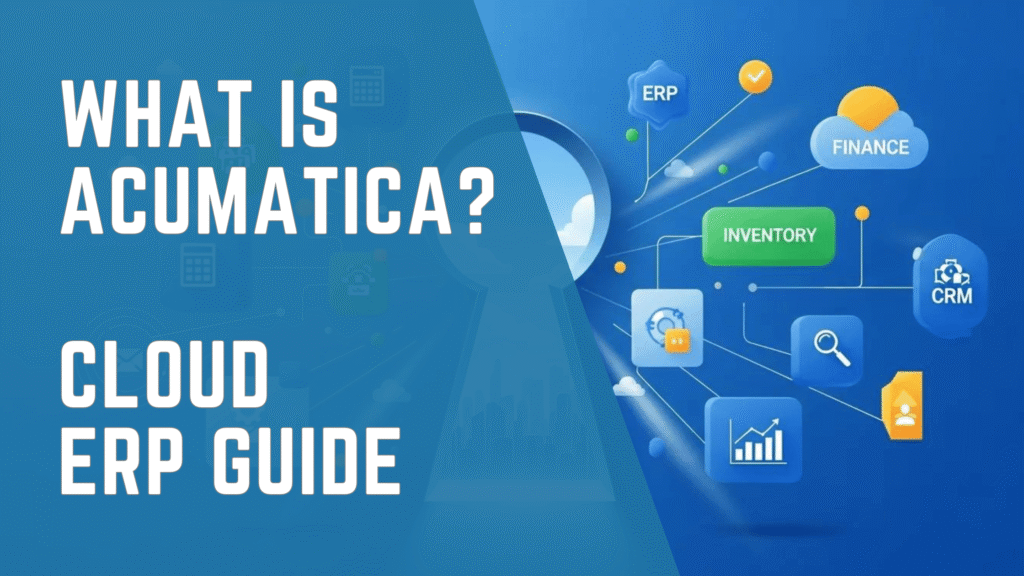
Acumatica Cloud ERP solution empowers businesses to streamline operations, enhance productivity, and adapt to changing market demands with its flexible deployment and unlimited user licensing. By integrating core processes such as finance, distribution, and customer relationship management, organizations can achieve a unified view of their operations, leading to better decision-making. Additionally, the cost-effective subscription model ensures that businesses can access powerful tools without significant upfront investments. Ultimately, discover how Acumatica Cloud ERP can transform your business today by exploring our offerings, and connect with IWI Consulting Group for expert guidance on implementation, optimization, and long-term ERP success.
What is Acumatica Cloud ERP and How Does It Work?
Acumatica Cloud ERP is a comprehensive software solution that integrates various business processes into a single platform, enabling organizations to manage their operations more efficiently. In addition, it operates on a cloud infrastructure, allowing users to access the system from anywhere with an internet connection. As a result, this flexibility is crucial for modern businesses that require real-time data access and collaboration among teams. Ultimately, the primary benefit of Acumatica is its ability to streamline operations by providing a unified view of business processes, which enhances decision-making and operational efficiency.
Defining Acumatica as a Cloud ERP Solution
Acumatica is defined as a cloud ERP solution that combines various business management functions into a single platform. Unlike traditional ERP systems that require on-premises installations, Acumatica leverages cloud technology to offer scalability, flexibility, and lower upfront costs. As a result, this modern approach allows businesses to adapt quickly to changing market conditions and operational needs, making it an ideal choice for organizations of all sizes.
This shift to cloud-based ERP solutions represents a significant evolution in enterprise software, impacting not just technology but also business models and organizational structures.
Cloud ERP Transformation: Business Model & Organizational Impact
This thesis investigates how the migration from on-premise ERP systems to cloud-based environments has transformed not only the technological infrastructure of enterprise software, but the entire logic through which ERP providers generate value, manage innovation, and interact with their ecosystems. What at first can appear to be a purely technical transition has revealed itself as a structural shift in the way these companies operate, organize their resources, and build long-term relationships with their clients.The cloud revolution in the ERP industry: business model transformation and organizational impacts, 2024
Core ERP Modules: Finance, Distribution, Manufacturing, and CRM
- Finance Module: Manages financial transactions, budgeting, and reporting, ensuring accurate financial oversight.
- Distribution Module: Streamlines inventory management, order processing, and supply chain operations, enhancing efficiency in distribution.
- Manufacturing Module: Supports production planning, scheduling, and quality control, optimizing manufacturing processes.
- CRM Module: Facilitates customer relationship management, helping businesses track interactions and improve customer service.
These integrated modules work together to provide a holistic view of business operations, enabling better resource allocation and strategic planning.
What Are the Key Features and Benefits of Acumatica Cloud ERP?
Acumatica offers a range of features designed to enhance business operations and improve overall efficiency. With that in mind, understanding these features can help organizations leverage the full potential of the software.
Flexible Deployment Options: Cloud and Hybrid Models
One of the standout features of Acumatica is its flexible deployment options. For example, businesses can choose between a fully cloud-based solution or a hybrid model that combines on-premises and cloud functionalities. This flexibility, in turn, allows organizations to select the deployment method that best suits their operational needs and IT infrastructure. Additionally, the cloud model offers advantages such as automatic updates, reduced IT overhead, and enhanced accessibility, while the hybrid model provides control over sensitive data.
Scalability and Unlimited User Licensing Explained
Acumatica is designed to scale with your business. In fact, it offers unlimited user licensing, which means organizations can add users without incurring additional costs. As a result, this feature is particularly beneficial for growing businesses that need to expand their workforce without worrying about licensing fees. Moreover, the scalability of Acumatica ensures that as your business grows, the software can accommodate increased demands without compromising performance.
How Does Acumatica Cloud ERP Pricing Work and What Are the Licensing Models?
Understanding Acumatica’s pricing structure is essential for businesses considering this ERP solution. In particular, the pricing is based on a subscription model, which provides flexibility and predictability in budgeting.
Subscription-Based Pricing Overview
Acumatica operates on a subscription-based pricing model, which typically includes various tiers based on the features and modules selected. As a result, this model allows businesses to pay for only the functionalities they need, making it a cost-effective solution. In addition, the subscription includes access to updates and support, ensuring that users always have the latest features and security enhancements.
Comparing Acumatica Pricing for Small Businesses
For small businesses, Acumatica offers competitive pricing compared to traditional ERP systems. In particular, the subscription model eliminates the need for large upfront investments, making it accessible for smaller organizations. Additionally, the unlimited user licensing means that small businesses can grow without facing escalating costs associated with adding new users.
| Pricing Model | Features Included | Cost |
|---|---|---|
| Basic Plan | Core modules | $1,000/month |
| Standard Plan | Additional features | $2,000/month |
| Premium Plan | All features | $3,000/month |
This table illustrates the different pricing models available, helping businesses choose the plan that aligns with their needs and budget.
Which Industries and Business Sizes Benefit Most from Acumatica Cloud ERP?
Acumatica is versatile and can benefit a wide range of industries and business sizes. Understanding the specific applications can help organizations determine if it is the right fit for them.
Is Acumatica the Best cloud-based ERP for Small Businesses?
Acumatica Cloud ERP is particularly well-suited for small to medium-sized businesses due to its scalability and cost-effectiveness. In fact, the unlimited user licensing and subscription-based pricing make it an attractive option for smaller organizations looking to implement an ERP system without significant financial strain. Moreover, the cloud-based nature of Acumatica Cloud ERP allows small businesses to access powerful tools that were previously only available to larger enterprises.
Industry Use Cases and Real-World Examples
Various industries have successfully implemented Acumatica Cloud ERP to enhance their operations. For example, manufacturers have utilized the software to streamline production processes, while distributors have improved inventory management and order fulfillment. Overall, real-world examples demonstrate how Acumatica Cloud ERP can lead to increased efficiency, reduced operational costs, and improved customer satisfaction across different sectors.
How Does Acumatica Integrate with Other Systems and Customize to Business Needs?
Integration capabilities are crucial for businesses looking to enhance their existing systems. In this regard, Acumatica offers robust integration options that allow organizations to connect with other software applications seamlessly.
Integration Capabilities with Third-Party Applications
Acumatica Cloud ERP supports integration with a variety of third-party applications, including CRM systems, e-commerce platforms, and payment gateways. As a result, this flexibility enables businesses to create a cohesive technology ecosystem that enhances data flow and operational efficiency. Furthermore, by integrating with existing systems, organizations can leverage their current investments while benefiting from Acumatica’s advanced functionalities.
Customization Options and User Roles
Acumatica provides extensive customization options, allowing businesses to tailor the software to their specific needs. For example, users can create custom dashboards, reports, and workflows that align with their operational processes. In addition, Acumatica supports role-based access, ensuring that users have the appropriate permissions to perform their tasks while maintaining data security.
Where Can You Find User Reviews, Training, and Support for Acumatica?
Access to user reviews, training resources, and support services is essential for organizations considering Acumatica. Understanding these resources can help businesses make informed decisions.
Customer Testimonials and Software Review Platforms
Many users have shared positive testimonials about their experiences with Acumatica, highlighting its ease of use, flexibility, and comprehensive features. In addition, software review platforms provide valuable insights into user satisfaction and the software’s performance in real-world applications. As a result, these reviews can guide potential users in their decision-making process.
Training Resources and Ongoing Support Services
Acumatica Cloud ERP offers a range of training resources, including online courses, webinars, and documentation, to help users maximize their understanding of the software. In addition, ongoing support services ensure that businesses have access to assistance when needed, further enhancing the user experience and ensuring successful implementation.
Frequently Asked Questions
What types of businesses can benefit from using Acumatica?
Acumatica is designed to cater to a wide range of businesses, particularly small to medium-sized enterprises (SMEs) across various industries. Its scalability and flexible pricing make it an attractive option for businesses looking to streamline operations without significant upfront costs. Industries such as manufacturing, distribution, retail, and professional services have successfully implemented Acumatica to enhance efficiency, improve customer service, and reduce operational costs. The software’s adaptability allows it to meet the unique needs of different sectors effectively.
How does Acumatica ensure data security for its users?
Data security is a top priority for Acumatica, which employs multiple layers of protection to safeguard user information. The platform utilizes advanced encryption protocols for data transmission and storage, ensuring that sensitive information remains secure. Additionally, Acumatica offers role-based access controls, allowing businesses to define user permissions and restrict access to critical data. Regular security updates and compliance with industry standards further enhance the platform’s security measures, providing users with peace of mind regarding their data integrity.
Can Acumatica be customized to fit specific business needs?
Yes, Acumatica offers extensive customization options that allow businesses to tailor the software to their specific operational requirements. Users can create custom dashboards, reports, and workflows that align with their unique processes. This flexibility ensures that organizations can adapt the ERP system to meet their evolving needs. Furthermore, Acumatica supports integration with third-party applications, enabling businesses to enhance their existing systems and create a cohesive technology ecosystem that maximizes efficiency.
What training resources are available for new Acumatica users?
Acumatica provides a variety of training resources to help new users become proficient with the software. These resources include online courses, webinars, and comprehensive documentation that cover various aspects of the platform. Additionally, Acumatica offers a community forum where users can share experiences and seek advice from peers. This support network, combined with ongoing training opportunities, ensures that users can maximize their understanding and utilization of the software for their business needs.
How does Acumatica handle software updates and maintenance?
Acumatica operates on a cloud-based model, which allows for automatic updates and maintenance without disrupting user operations. This means that businesses always have access to the latest features, security enhancements, and performance improvements without the need for manual installations. The subscription-based pricing model includes these updates, ensuring that users benefit from continuous improvements and support. This approach minimizes IT overhead and allows organizations to focus on their core business activities.
What are the advantages of using a cloud-based ERP like Acumatica?
Using a cloud-based ERP like Acumatica offers several advantages, including enhanced accessibility, scalability, and cost-effectiveness. Users can access the system from anywhere with an internet connection, facilitating remote work and collaboration. The cloud model eliminates the need for significant upfront investments in hardware and infrastructure, making it more affordable for businesses of all sizes. Additionally, Acumatica’s scalability allows organizations to grow without facing escalating costs, as they can add users and features as needed without incurring additional licensing fees.
Conclusion: Acumatica, a Cloud-based ERP
IWI Consulting Group helps businesses unlock the full potential of Acumatica through tailored ERP implementation, automation, and optimization solutions. By integrating finance, distribution, and customer management into one cloud-based platform, businesses gain better visibility, improved efficiency, and greater scalability. With Acumatica’s flexible subscription model and IWI’s ERP expertise, organizations can reduce operational complexity, improve decision-making, and confidently adapt to changing business demands.