Category: ERP/Business Solution

How do you minimize waste in the food and beverage business?

Food and beverage business is one of a kind industry that makes more profit but with a lot of effort involved when compared to other industries. However, the most crucial part of management is all about handling wastes associated within the process. The food supply chain becomes more sustainable when the waste management is done right. It is normally considered as an overhead cost by the decision makers and seems to be low in fraction. But the truth is, waste unnoticed has a greater impact on the bottom line of the business. Once these get traction in the decision making process, it can make a heavy movement towards upward growth. 

It is always easy to advise but to say how to do it, needs a master in that industry. Because, the operational actions to reduce wastage involves right planning and orderliness. Having said this, we are here to help you to understand the ground reality with the right key to solve the issue. The first step all you need to improve efficiency is that you need to find where the lag is. We are discussing the problem areas and the management tips to solve them.

Overstocking

The Food and Beverage Industry does not see a steady supply and demand, it usually faces violent fluctuations. It’s always been a problem to ensure appropriate stock levels. Maybe we cannot increase manufacturing speed that ends up in raw material spoilage or sales might cause your finished product to remain at the warehouse. 

The ability to foresee consumer demand with high precision reduces overstocking thereby reducing waste. Therefore making use of good business intelligence software to accurately forecast the demand can actually be an immediate solution to reduce wastage. Sage X3 comes with that kind of robust technology with business intelligence to help you reduce overstocking. 

Click here for demo

Cross Contamination

During manufacturing or logistics, cross-contamination may happen through mishandling. There may be allergens or microscopic particle leaks out to the ingredients. This is the most important factor to consider because even a small leakage may have an adverse effect on bulk stocks. The problem is being addressed in every manufacturing unit and a solution is still under development.

It can be a warehouse or the process units, unless the protocols and SOP are set at high standards, cross-contaminations are unavoidable. The commitment to safe food handling relies on actively tracking the operations and distribution. Sage X3 has it all! The tracking functions in sage, for e.g. allergen tracking system makes it to track and warn to move out before they get spoiled.

Production Loss

These are inevitable losses which would need awareness but cannot be 100% eliminated. It may be the residues on equipment, or spill outs that are considered to be negligible. Practically, these wastes are  not negligible but tracking this right will have a considerable impact on loss reduction. 

Production losses are always unavoidable but in that case, having a clear picture of where exactly the losses are, help to innovate better or to take necessary actions. Henceforth, awareness about food waste is more important. Sage X3 tracks the entire process and enlightens about the losses occurred during the process. This insight is yet another seed to reduce wastage 

When it comes to wastage or loss, it is because of non consideration. Moreover, it is not negligible, it is because of a lack of systematic approach towards tracking. When a timely forecast is made, overstocking can be traced, the most unknown production loss identifying where the loss actually occurs is exactly traced. Even though the production losses are non-mitigatable, enlightenment about the system to the decision makers, allows them to strategically approach further losses. Sage X3 built with robust technology has traceability tools which are user friendly with high precision. 

Sage X3 is a tailored fit software offering unique advantages in the food and beverage businesses. Expiration management, bulk stock management and process information are few important features of Sage X3 that allows you to automate and process without you in place to manage everyday. The data and the insights that are available at one fingertip makes it a user friendly option to resolve waste management challenges. 

To have a practical experience, visit the https://iwigroup.ca/software/sage-x3/ and get a free demo. 

Read More

3 Ways to Boost Inventory Management in Food & Beverage

Why do Businesses Choose Sage Intacct?

One of the most important business decisions for any organization is deciding which business management solution to adopt. Sage Intacct is a leading cloud ERP solution and is particularly popular with small to medium-sized businesses.

As a solutions partner, IWI Consulting Group helps growing businesses implement ERP solutions every day. By employing an effective discovery process, IWI Consulting Group is perfectly positioned to uncover crucial insights into an organization’s unique requirements based on its growth strategies, challenges, markets, and information management. The choice of ERP solution is so important because choosing the right solution directly impacts whether the business will climb the ladder to ultimate success and mastery.

Why is Sage Intacct so popular with burgeoning small to medium-sized businesses? Here are four of the most common reasons businesses choose Sage Intacct:

Reason1: Licensing Flexibility

One of the most important features cited by businesses about Sage Intacct lies in its licensing flexibility. Not all users in an organization require the same level of access to Sage Intacct.  Sage Intacct offers licensing options that range from users requiring full access to casual uses that don’t require full access. What this means is that an organization needn’t pay the same licensing fee for a user that only requires access on an infrequent or limited basis as a user that incorporates Sage Intacct in every aspect of their workflow. Essentially, with Sage Intacct, the organization only pays for what it uses!

Food Manufacturing

Reason2: Cloud-Native Implementation For Food Manufacturing

A cloud-native solution has many benefits. With a cloud-native solution, there is no need to install software on servers locally and then maintain those servers and software. It is a fully-managed service and thus Sage takes care of all the underlying infrastructure, so you don’t have to. With a cloud-native solution then, hardware maintenance is a thing of the past. So there is the ease of maintenance, and your organization is assured of a highly available, reliable, and scalable solution.

Reason3: Partner Integrations

Sage Intacct’s flexibility extends to its integration capabilities. Sage Intacct Marketplace integrates with over 200 partners for a comprehensive and extensible solution that meets the various requirements of every business and helps future-proof your business as your business requirements change and grow over time. Sage Intacct integrates with partners that help with payroll, point of sale, tax management, time and expense, CRM, e-commerce, inventory management, finance and admin, and business management. Over 75% of Sage Intacct customers have seamlessly integrated multiple Marketplace solutions!

Reason4: Flexible and Powerful Chart of Accounts

Most solutions implement a hardcoded structure for an organization’s chart of accounts. Consider, to track 4 locations, 5 departments, and 5 projects, an organization would require 100 account code combinations! The result is an overly complicated and unwieldy set of codes. Furthermore, if a new location or department needs to be added, it could wind up forcing the business to add hundreds of accounts. Instead, Sage Intacct helps simplify your organization’s chart of accounts. All that is required is that your business configure a set of primary account codes. Sage Intacct supports tagging transactions and operational data using dimensions, offering a unique and flexible way to track and report data, while simultaneously simplifying the organization’s chart of account. By tagging with dimensions rather than using hardcoded accounts Sage Intacct supports adding metadata and context to your business’s data. Once created, a dimension may be used for any transaction.

Read More

Why are Businesses choosing Sage Intacct over other Solutions?

Why do Businesses Choose Sage Intacct?

One of the most important business decisions for any organization is deciding which business management solution to adopt. Sage Intacct is a leading cloud ERP solution and is particularly popular with small to medium-sized businesses.

As a solutions partner, IWI Consulting Group helps growing businesses implement ERP solutions every day. By employing an effective discovery process, IWI Consulting Group is perfectly positioned to uncover crucial insights into an organization’s unique requirements based on its growth strategies, challenges, markets, and information management. The choice of ERP solution is so important because choosing the right solution directly impacts whether the business will climb the ladder to ultimate success and mastery.

Why is Sage Intacct so popular with burgeoning small to medium-sized businesses? Here are four of the most common reasons businesses choose Sage Intacct:

Reason1: Licensing Flexibility

One of the most important features cited by businesses about Sage Intacct lies in its licensing flexibility. Not all users in an organization require the same level of access to Sage Intacct.  Sage Intacct offers licensing options that range from users requiring full access to casual uses that don’t require full access. What this means is that an organization needn’t pay the same licensing fee for a user that only requires access on an infrequent or limited basis as a user that incorporates Sage Intacct in every aspect of their workflow. Essentially, with Sage Intacct, the organization only pays for what it uses!

Reason2: Cloud-Native Implementation

A cloud-native solution has many benefits. With a cloud-native solution, there is no need to install software on servers locally and then maintain those servers and software. It is a fully-managed service and thus Sage takes care of all the underlying infrastructure, so you don’t have to. With a cloud-native solution then, hardware maintenance is a thing of the past. So there is the ease of maintenance, and your organization is assured of a highly available, reliable, and scalable solution.

Reason3: Partner Integrations

Sage Intacct’s flexibility extends to its integration capabilities. Sage Intacct Marketplace integrates with over 200 partners for a comprehensive and extensible solution that meets the various requirements of every business and helps future-proof your business as your business requirements change and grow over time. Sage Intacct integrates with partners that help with payroll, point of sale, tax management, time and expense, CRM, e-commerce, inventory management, finance and admin, and business management. Over 75% of Sage Intacct customers have seamlessly integrated multiple Marketplace solutions!

Reason4: Flexible and Powerful Chart of Accounts

Most solutions implement a hardcoded structure for an organization’s chart of accounts. Consider, to track 4 locations, 5 departments, and 5 projects, an organization would require 100 account code combinations! The result is an overly complicated and unwieldy set of codes. Furthermore, if a new location or department needs to be added, it could wind up forcing the business to add hundreds of accounts. Instead, Sage Intacct helps simplify your organization’s chart of accounts. All that is required is that your business configure a set of primary account codes. Sage Intacct supports tagging transactions and operational data using dimensions, offering a unique and flexible way to track and report data, while simultaneously simplifying the organization’s chart of account. By tagging with dimensions rather than using hardcoded accounts Sage Intacct supports adding metadata and context to your business’s data. Once created, a dimension may be used for any transaction.

Read More

Appetite for Success: The Complete Guide to Food and Beverage Manufacturing ERP

Food and beverage manufacturing ERP helps drive sustained success and improve operations. Not sure where to start? Our complete F&B ERP guide has you covered.

Read More

Switching to Cloud Accounting Software

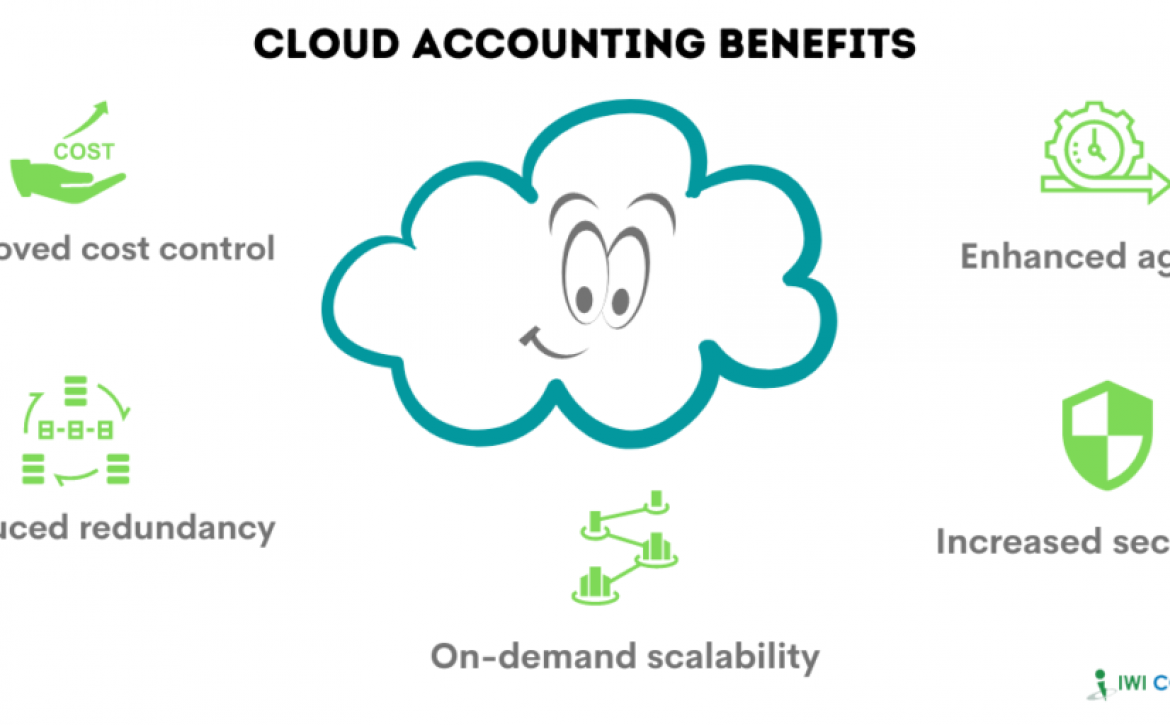
More firms are now switching to cloud accounting software. Here’s the list of benefits, why to make the move and how to make it successful.

Read More

ERP Best Practice for Manufacturing Industry

Boost your current business management software’s performance and get most out of it with these proven ERP best practices for manufacturing industry.

Read More

Overcoming Operational Challenges with Manufacturing ERP

Canadian manufacturing firms have made significant market strides both at home and abroad, but many still face familiar operation challenges.

Read More

Food ERP and Traceability: Key Ingredients for Enterprise Success

The combination of food traceability and food ERP is now essential to maximize ROI for Canadian food producers and manufacturers.

Read More

5 Tips to Avoid Cloud ERP Implementation Failure

ERP business solutions can help enterprises improve efficiency and streamline operations, but even ideal software can fail to deliver desired outcomes if companies don’t address key implementation issues. Here are five ways to avoid cloud ERP failure.

Read More

Why Food and Beverage Firms Need Complete ERP Solutions

The right ERP system can help Canadian food and beverage companies adapt to changing market priorities — without compromising profitability

Read More
#zikzag_button_69a6773945ec8 { color: rgba(255,255,255,1); }#zikzag_button_69a6773945ec8:hover { color: rgba(49,49,49, 1); }#zikzag_button_69a6773945ec8 { border-color: rgba(49,49,49, 1); background-color: rgba(87,143,68,1); }#zikzag_button_69a6773945ec8:hover { border-color: rgba(49,49,49, 1); background-color: rgba(255,255,255,1); }#zikzag_button_69a6773945f3c { color: rgba(255,255,255,1); }#zikzag_button_69a6773945f3c:hover { color: rgba(49,49,49, 1); }#zikzag_button_69a6773945f3c { border-color: rgba(49,49,49, 1); background-color: rgba(2,122,192,1); }#zikzag_button_69a6773945f3c:hover { border-color: rgba(49,49,49, 1); background-color: rgba(255,255,255,1); }