IWI Consulting Group - authorized Sage partner Ontario, Canada

Category: Uncategorized

Move to The Cloud For Superior Business Operations

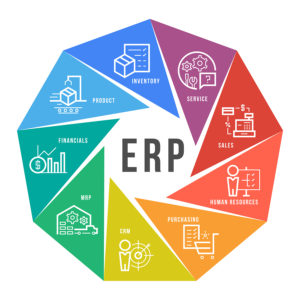
Trying to manage your company’s daily operations using multiple pieces of software, all downloaded onto individual computers in the office, is now an antiquated way to handle the needs of a midsized business. Not only is it more efficient to combine all functions like Finance and Accounting, Human Resources, Supply Chain Management, and Customer Relations into one place, but doing so via the cloud can take an entire business further.

For mid-sized businesses that are growing, global, or small businesses that have plans to expand, software like Sage 300cloud (formerly known as Sage 300 ERP) is a cloud-based system that can make it all happen. Many businesses are now enjoying the efficiency, flexibility, access, cost-saving, and security benefits of cloud computing. There are several reasons to use an all-in-one program that runs on and can be accessed through cloud servers.

Managing multiple operations within a centralized program saves time and money. There is no new hardware or software to purchase, uninstall, and reinstall for upgrades. ERP programs are adaptable and flexible to suit a company’s specific and changing needs. There’s no need to switch between programs while multitasking. The system is also fully customizable, with a dashboard and analytics that can be configured and tailored to meet unique needs and show valuable insights.

ERP software allows for full flexibility and access control. Employees can access information and complete tasks from remote locations and in-transit. Laptops, phones, tablets, or computers can be used to access the system. People are no longer tied to being present in the office to change or access data when something suddenly springs up. Access can also be restricted if necessary. These features dramatically increase efficiency and control.

Updates to a program happen automatically on the Salesforce App Cloud, and there is no need to bring in IT personnel to troubleshoot and attempt to fix software or hardware issues related to the system. Every user has access to the newest version and the latest changes cross-company, instantly.

Programs feature real-time visibility of the whole organization, what-if modelling, recruitment tools, hiring support, and automated workflows. This increases the ability to locate, hire, and on-board the best new candidates. ERP systems like Sage Business Cloud Enterprise Management (formerly known as Sage X3) can help grow your business by reducing waste and improving productivity by integrating seamless operations throughout the company.

Payroll is no longer a headache with streamlined control and processes that comply to current laws and regulations, with comprehensive reports and financial solutions. Employees can access information they need from any location they desire.

Enterprise Management Company IWI Consulting Group helps Canadian businesses and non-profits implement their new software quickly and cost-effectively. We serve businesses across Canada providing optimized operations and finance systems with performance and growth at the forefront. Our professional consulting team is dedicated to finding the specific solutions you’re looking for – plus ones you didn’t even know were possible. Our ERP consultants connect your business with Enterprise Resource Planning (ERP), Customer Relationship Management (CRM), Human Resources Management (HRMS), and IT networking services easily and seamlessly.

Implementing and using a new system is intuitive, with continued support and services from our highly-trained and experienced team who have an optimal blend of industry experience and technical expertise. Transitioning to new software like Sage 300cloud (formerly known as Sage 300) or Sage Business Cloud Enterprise Management on the cloud has never been easier.

Read More

Sage Software Helps Nonprofits Measure What Matters

Sage SoftwareSage Intacct Helps Measure Against Outcomes, Improve Transparency

Sage software can help you measure what matters in the world of nonprofit organizations. Specific Sage software, such as Sage Intacct, provides you with a strong measure of transparency and accountability, both of which are vital to a healthy nonprofit that engenders trust among donors and members.

Nonprofits: Good Stewards of Their Resources

With more organizations competing for donors’ dollars, it’s vital to demonstrate that your organization is a good steward of financial resources. To do this, you must show your constituents that you are tracking expenses against outcomes.

For-profit organizations have business goals, typically improving profits for business growth and shareholder wealth. Nonprofits also have goals, but these goals are measured in different ways. Nonprofit goals, or outcomes, may be measured by the difference the nonprofit makes in the world (number of panda bears saved, carbon credits offset, children who receive nutritious meals). While these outcomes may seem difficult to quantify, nonprofits can create their own scorecards to measure their own progress toward goals. This is outcome metrics in a nutshell.

Blended Scorecards Are a More Realistic Tracking Method

One way to measure outcome metrics is to measure across programs and vital metrics to create what’s called a blended scorecard. Such blended scorecards include hard financial metrics, such as debt to expenses, but also soft metrics, such as impact made across programs. Data collected across a range of points and shared in a public, transparent way can help you provide to donors and members that you are fulfilling your mission with an eye towards the future.

No matter what your goals are for your nonprofit organization, measuring against goals and reporting the outcomes to your constituents is important. With growing public skepticism about the use of funds by companies as well as nonprofits, it is important to show good faith and offer transparency into your financial through whatever means you may have. Tracking metrics against outcomes is a great way to start.

Sage Intacct: Making Measurement Easy

Among the many Sage software products available for businesses, Sage Intacct can be used by both for-profits and not for profit organizations to track outcome metrics. As a Sage software product, it features the same intuitive setup and ease of use that Sage is famous for building.

Can you use Sage Intacct for outcomes measurement? Yes, and you can also make it visible to your Board of Directors with Sage Intacct’s Digital Board Book. These elements provide critical metrics that your Board wants to see. Sage Intacct also offers reporting and dashboards for financial management and accountability.

Why wait for the annual report to offer your Board a glimpse into how well your organization is doing against metrics? Adding Sage Intacct provides a streamlined way to manage operations and financial data as well as the transparency that nonprofit boards seek. Contact IWI Consulting Group today to learn more about Sage Intacct.

IWI Consulting Group

IWI Consulting Group helps Canadian businesses and non-profits choose and adapt the best enterprise resource planning (ERP) software for their needs. Small to mid-sized companies will find the help and resources they need to choose the right software at the right value. For more information, visit IWI Consulting Group or call 1-866-916-3851.
Read More

Managing Tariffs and Cost Uncertainties in Manufacturing

Sage softwareWith the rising uncertainty created by American President Trump’s protectionist tariffs, Canadian manufacturers need all the facts they can gather to manage around marketplace uncertainties. Sage software offers transparency, real-time data from cloud-based products, and solid reporting capabilities to help you manage costs in an uncertain environment.


American Tariffs and Their Potential Impact on Canadian Businesses

The proposed 25% tariff on steel and 10% on aluminum are expected to significantly cut into American manufacturing profits. Fully one-third of the 100 million tons of steel used by American businesses is imported into the United States each year and 90% of the total 5.5 million tons of aluminum used by U.S.-based companies is also imported. Approximately 17% of that steel is imported from Canada.

Although the thought behind protective tariffs is often popular, the results may be anything but popular once companies raise their prices to accommodate the additional tariffs. Canadian companies may find steel orders falling if their American customers cannot order as many products, which in turn could potentially impact Canadian businesses.

… and Canada Retaliates

Canada isn’t taking these moves towards protectionist tariffs lightly. Canada announced its plans to retaliate with $16.6 billion worth of restrictions on United States imports. The affected goods include steel, aluminum, and other products.

There are many other items that could possibly be impacted by the retaliatory tariffs. Many of the raw goods and materials used by Canadian manufacturers to fill their orders could be affected. While the actual amount per item may vary, the overall impact is one of potential rising costs and uncertainties. And, as most business people know, the stock market and the business world hates uncertainty. It nearly always has a negative impact on business.

These uncertainties are unintentional consequences of a change in tariffs. While your business cannot change the laws surrounding exports of products into other countries, it can use the data available to manage around such uncertainties.

Using Sage Software Data to Manage in an Uncertain Environment

When tariffs tack on fees to imported raw materials, what should you do? You can increase your prices to cover the increased costs, but that can result in lost business. Or, you could keep prices the same, but recognize that the new tariffs have cut into your profit margin.

There’s another way that helps you manage the uncertainties around trade wars, tariffs, and everything in between—managing from your data.

With Sage software in place, you’re collecting a lot of useful, valuable data. You’ve probably read in countless business journals that you should be using data to drive decision-making. Now is the time to use that data from your Sage software to make your decisions!

For example, you can:

  • Review your supply chain vendors and favor those without restrictive tariffs to keep costs down
  • Find new, local or at least in-country sources of raw materials needed
  • Consider offsetting the additional costs from tariff-based items by finding lower-cost alternatives to other elements used to make your products
  • Find other methods to lower the final cost of goods sold without sacrificing quality

We can’t answer these questions for you, but the data you can run from Sage software may go a long way to helping you make wise choices for your business. Let the politicians in Washington and Ottawa fight it out—you’ve got a business to run. With Sage software, you’re armed with the facts to make smart moves that can help you maintain profitability.

IWI Consulting Group

IWI Consulting Group helps Canadian businesses and non-profits choose and adapt the best enterprise resource planning (ERP) software for their needs. Small to mid-sized companies will find the help and resources they need to choose the right software at the right value. For more information, visit IWI Consulting Group or call 1-866-916-3851.

Read More

ERP Software Elevates Your Discrete Manufacturing Business

If you work in discrete manufacturing, you know the multitude of challenges specific to your specialized products. Integrating and managing complex systems and components like designs, materials, parts, importing, locations, staffing, daily operations, and more, takes extraordinary organization skills. Whether you produce a low volume of complex and niche units or a higher volume of products with a more simplistic design, Enterprise Resource Planning (ERP) software can be tailored to suit the unique needs and challenges of your manufacturing system. With constant, ongoing changes in technology and markets, IWI Consulting Group can help you improve lead times, cut costs, reduce waste, and increase managing capabilities with a fully integrated ERP system.

Discrete manufacturing can range from a luxury convertible to a basic mobile phone, but both businesses face similar challenges in their respective competitive markets. Consumer tastes, trends, disposable income, and economic climate are constantly shifting. Global supply chains can become disrupted by new tariffs or laws. The rules and regulations placed on industries and products can tighten (sometimes loosen) and this can alter designs and materials. For businesses to stay current and competitive, innovative, and producing at peak efficiencies, resource management needs to be both dynamic and accurate. ERP software can help establish a lean manufacturing process that streamlines systems, responds to client and customer demands, reduces waste, increases output, and provides the necessary data and analytical tools to improve decision-making.

IWI Consulting Group offers multiple Sage ERPs to choose from to suit your organization. We can set your business up with Sage 300cloud (formerly known as Sage 300) which was previously known as Sage Accpac solutions in Toronto and the GTA, Sage EM (formerly known as Sage X3), plus an entire suite of enterprise management software solutions for financial, human resources, and cloud computing goals.

How?

Enterprise Resource Planning software allows you to plan, schedule, and control manufacturing operations and individual activities. It accommodates a range of environments like make-to-order, configure-to-order, assemble-to-order, make-to-stock, and mixed-mode, as well as switching amongst them. Data and records update in real-time as transactions happen for accurate and timely decision-making and planning.

Productivity is improved with real-time control and visibility of production schedules, capacities, shop floor activities, and cost controls.

Cost Management is made more efficient through the reduction of inventory losses with superior tracking and accounting. Shrinkage and labour hours can be reduced with smoother processes. Time spent reporting and analysing is reduced through integrated databases for manufacturing, distribution, and finance.

With so many parties needing to operate in-sync – employees, executives, suppliers, and vendors – tight collaboration with effective communication is essential to remain cost effective. An ERP system allows for speedy information flow that is adaptable to every project, with defined tasks that are traceable, plus, time and costs can be monitored and managed.

Customer service can be improved with the ability to promise deliveries based on real-time information and capacities. Our cloud-based systems allow salespeople to access information on their devices, on-the-go or remotely, for quick access. It’s simple to track order status, inventory, and availability, maintain progress reports and balance sheets.

As an ERP Software Service Provider and Sage Business Partner, IWI Consulting Group can help match the perfect Sage ERP software with your discrete manufacturing business. Our industry and technical knowledge provides customized assessments for sustainable ERP systems to improve management, operations, and revenue. We’re happy to answer any questions, so contact us to learn more about how our management systems can help secure and grow your business.

Read More

Picking Errors Cost More than You Think

Sage 300A fully automated warehouse can help you reduce errors. Have you ever considered just how the tiniest mistakes impact your business?

Consider these statistics. The average picking error rate is between 1% and 3%. That doesn’t sound too bad until you consider just how many orders that impacts.

If your warehouse processes 100 orders an hour, that means that 1 order will be wrong every hour. Multiply that by the average 8-hour workday and that’s 8 incorrect orders a day. In one month, that’s 240 mistakes!

Your numbers may be lower than that, of course, or your reported error rate may be lower. You may not even know that a customer’s order is wrong unless they report it; many people don’t, especially if the mistake provides them with higher cost materials than they originally ordered.

Think of all the lost productivity and profits those numbers represent. Returns may be higher than usual because of mistakes in picking and packing; inventory may be inaccurate if the wrong items are included in outbound orders.

Barcode scanners connected to your ERP system no longer require heavy investments into new hardware. Instead, you can transform your mobile device into a barcode scanner with Sage-compatible software. Learn more about barcode scanners and watch our video for more information on how scanners can improve efficiency in the fully automated warehouse.

The Cost of NOT Having a Fully Automated Warehouse

There are additional costs of picking errors that can make the cost of not having a full automated warehouse clear:

  1. Lost sales. Picking errors usually mean shipping errors and shipping errors result in lower customer satisfaction and customer retention. One picking error can affect the customer’s perception of an entire order. That is why it is important to improve the picking and fulfillment process before it has an impact on the customer.
  2. High return rates. Returns are expensive. You have the cost of documenting the problem, return shipping, and retagging to name a few.
  3. Extra shipping. There are even more shipping costs than the expense of the return; you also need to consider the cost of expediting the correct order.
  4. Added service costs. Errors that impact the customer mean more time spent in customer service to field the complaint and solve the problem.
  5. Increased packaging costs. Don’t forget that if you can reuse the returned item, it has the added expense of being repackaged.
  6. Additional labor costs. In addition to restocking costs, you have the wasted labor hours spent on that unit. A picking error could be a stocking error, meaning you may have the cost of doing a cycle count at that location.
  7. High COGS. Costs rise as more people need to get involved in the process. Persistent fulfillment problems can damage the sales process—now your sales force is spending time placating customers rather than making new sales.

A Fully Automated Warehouse Improves Profits

When you add up these costs, the benefits and return on investment (ROI) for a fully automated warehouse just got easier to prove. In fact, most warehouse managers believe increasing automation and adopting mobile technology in the warehouse can have the greatest impact on improving profitability. Choosing warehouse automation makes a lot more sense than the cost of doing nothing.

Warehouse inventory software, specifically barcode scanners, improves profitability by reducing costly errors. When you can swipe and scan a barcode using mobile technology that’s as simple as tapping your smartphone, you’ll see an improvement in order accuracy and inventory management.

Mobile scanners are also easier to train people to use because the technology is so familiar. People are used to scanning items with their smartphones, and scanning barcodes is no different. Barcode scanners make inventory management faster and easier.

A fully automated warehouse is also connected to an ERP System, so if you are running both, you’ll enhance productivity and accuracy even further.

The task of moving to a fully automated warehouse is much less daunting when you can get everything you need from a single source. Sage 300 offers a direct connection to your warehouse automation software which verifies every item as it is shipped or received, improving accuracy in your warehouse. You can do all this without the cost of purchasing expensive equipment. Transform your cellphone into a powerful barcode scanner, integrate it with your ERP, and reduce costly mistakes.

IWI Consulting Group offers more information on our website. Watch the barcode scanner video, learn more about Sage 300 products, and talk to us first about improving warehouse efficiency. For more information, visit IWI Consulting Group or call 1-866-916-3851.

Read More

Signals That Your Nonprofit Needs a New Accounting System

nonprofit accountingThere comes a time in every organization when change needs to happen to improve efficiency, meet new goals, or keep up with donor demands.
Change is always hard and changing accounting systems can be difficult for many organizations. Employees are used to working a certain way. The current system is familiar and comfortable. They know precisely how to run reports, input data, and find what they need.

Is It Time for a New Accounting System?

There are certain signs and signals that let you know when it’s time for a new nonprofit accounting system. Do any of these sound familiar?

  • Expansion: Your organization has grown since you implemented your original accounting system. Now you’ve got several locations, additional staff, and more volunteers. The current system can’t accommodate all its users. You’re constantly paying more money for additional site licenses so that telecommuting workers and new locations can access the same data.
  • Out-of-synch data: Separate systems at numerous locations mean that you’re regularly updating databases so that the information is in sync. You’re feeling frustrated because changes made to one database don’t flow through to others.
  • Changing priorities: When you installed your current system many years ago, you just needed to replace a paper-based or spreadsheet-based accounting system with a computerized system. Now, however, you need to track different funds. You’ve expanded your operations and offer more services, but your system can’t handle the newer information. Priorities have changed, but your system hasn’t.
  • Forever fixing: “Forever fixing” or “constantly patching” means that you’re always patching, fixing, or tweaking your existing system to get it to work. Maybe it crashes a lot. Perhaps it was infected with a virus last year which your IT people were able to remove, but it hasn’t worked the same way since. It stalls, freezes, or otherwise doesn’t work the way it should.

If you recognize your organization in any of these scenarios, it’s time to consider a new accounting system. You’ll be amazed at what’s available now for mid-sized nonprofits.

Sage Intacct: Powerful Nonprofit Accounting in the Cloud

Sage Intacct is an accounting system that meets the needs of all types of nonprofit organizations. While many of the challenges of nonprofits and for-profit entities are similar—increasing revenue, consolidating across multiple entities, budgeting, etc. —other challenges are unique to nonprofits. Financial leaders for nonprofits also face unique challenges that come from part-time staffing, volunteers, and governance. Nonprofits are not trying to maximize profitability, but impact.

Sage Intacct is cloud based, meaning that it offers the type of flexibility nonprofit organizations need. Cloud-based systems run off the internet, so there’s no software to buy and install. These systems are also accessible wherever you have internet access. You can continue working whether you’re at home or at the office, and you can add additional locations quickly and easily.

Because Sage Intacct is available in the cloud, the data streams in “real time” to the main database and back out to the users. This means that changes made in one location in your company flow through to all users. No more accessing data in one part of your company and finding it differs from data in another part.

Lastly, Sage Intacct can synchronize with other systems, such as membership systems, donor tracking, and more. Your nonprofit can integrate multiple systems into an accounting system and track all its operations.

Watch this video to learn more about Sage Intacct for nonprofit accounting.

If you’ve put off changing to a new system because you were afraid of the downtime or expense, please contact IWI Consulting Group today. We work with nonprofits to transition them into new systems and help them enhance their business and accounting processes. We can help you select the best accounting system for your needs and help you transition to a new system with minimal disruption and downtime. For more information on Sage Intacct for nonprofit accounting, visit IWI Consulting Group or call 1-866-916-3851.

Read More

How to Improve Accounting Efficiency

Sage softwareSage business solutions can help you improve accounting efficiency.

What is efficiency? How does your business define efficiency? Every business defines efficiency differently, and every department as well.

However, when it comes to accounting efficiency, most accountants focus on three areas to improve efficiency:

  1. Time management
  2. Technology
  3. Work-life balance

Accounting Efficiency: Surprise Findings

If you looked at these three areas, which one do you think presents the biggest challenge for accountants? The answer will surprise you—it’s work-life balance.

The white paper previously referenced indicates that over 30% of respondents view work-life balance as their biggest challenge. Following closely on this response, keeping up with technology ranked second and time management, third. After that, other factors involving workflow management, staffing, and keeping up with changing standards, as well as other items, all add to the complicated tangle of issues facing accountants today.

Let’s focus exclusively on the top three challenges. Technology, especially Sage software such as Sage EM (formerly known as Sage X3), Sage Intacct, and Sage 300cloud (formerly known as Sage 300), can assist with these concerns.

Keep Your Eye on the Big Picture

When it comes to finding the right technology, the trick is to focus on the big picture rather than the immediate needs. We know that’s easier said than done: after all, you’ve got to solve today’s challenges before you can turn your attention to tomorrow’s opportunities.

The big picture includes internal items, such as what’s going on within your company, as well as the broader horizon. That includes industry-wide trends, competitive forces, and changes, updates, and advances in the accounting profession.

All this information assists you in gaining insight into both the needs of the present and the future. These needs can then guide your technology choices so that you consider both when choosing software. If you consider both current and future needs, you’ll choose software that can grow alongside your business. It will be suited to both present needs and to future challenges that arise.

Improve Time Management Skills

There are many books, classes, and helpful articles to help accountants improve their time management skills. One such method includes blocking time out on the calendar for administrative tasks and for quiet-time tasks, so that you aren’t interrupted.

It’s important to set boundaries and limits around ad hoc meetings. Although some people prefer to have an open-door management policy in which subordinates can seek and obtain meetings on the fly, this can disrupt productivity.

Using software for time management may also be helpful. Shared electronic calendars, for example, enable you to share meeting time blocks in advance so that others can schedule around your preferences.

Leverage Technology to Improve Work-Life Balance

Now we come to the big one: work-life balance. Everyone struggles to achieve work-life balance, accountants included. Technology can help or hurt your efforts to ensure better work-life balance.

For example, smartphones and tablets help everyone stay in close contact. We can manage email, access certain cloud-based software, and check social media accounts using these devices. They can also keep us in too close contact with the office during holidays and family vacations, times when it’s best to unplug and unwind.

As with all technology, devices can be our servants or our masters. It’s really up to you how much connection you want with work while you are out of the office. Cloud systems can certainly make it easier to keep track of information, connect with suppliers, and answer questions from your team while you are away.

Sage Software: Cloud or Site Based, Improve Productivity and Efficiency

Sage software offers great accounting and financial management tools that assist with operations and other functions. Transparency, easy access, and a user-friendly dashboard enables you to do more with Sage technology than you thought possible.

Sage offers both a cloud-based software as well as a site-based versions, so you can choose the tool that’s right for your business. Enhance productivity, improve efficiency, and make data easily accessible by everyone with Sage technology.

If you would like to explore Sage software for your business, contact IWI Consulting today. We can walk you through this and other fine Sage software products to explore the best fit for your business needs. Please visit IWI Consulting Group or call 1-866-916-3851.

Read More

Always Be Recruiting: A Company’s New Edge to Find Great Talent

Sage PeopleThere’s an old acronym in sales: ABC, or “always be closing.” We have a new acronym for you: ABR. It stands for “always be recruiting” and is the new, best way to find top talent for your company. Experts say that it costs up to 50% of an employee’s annual salary to recruit and fill a vacancy. It probably costs more if you factor in the time of screening potential new hires, training time, and more. Costs can also rise if you are recruiting for senior-level positions versus entry-level ones.
The old method of finding employees doesn’t work well anymore. You can’t rely on help wanted ads, resumes, reference letters, and a slew of interviews to find your next superstar. Sure, you may use all of these techniques and more, but you need to do more to reach into your networks to find the right people to fill talent vacancies.

Companies need the best and brightest employees to innovate in their industries. People are the engine that runs your business. To find the right people, constant recruiting and enacting techniques to keep in front of people who may be interested in working for your company are great ways to always be recruiting.

Build Brand Awareness Among Potential Workers

Corporate brand awareness isn’t just about ensuring your logo is on all your trucks or letterhead. It’s about consistent messaging across all platforms and sharing the values and vision of your company. It extends beyond ads, marketing materials, and logos to the world of social media, where you can build brand awareness and make your company appealing to possible employees.

Why do some employees stay at your firm for many years? Ask them. This can provide a glimpse into some of the brand attributes or the implicit promise our company makes to employees when they come on board. You may have a brand as a great place to work, thanks to flexible hours, friendly teammates, or constant creative challenges. Each of these brand attributes appeals to different people but, over time, maintaining a company culture that fulfills these brand attributes builds a reputation in the marketplace.

Build a Great Reputation

Like attracts like. You’ll attract superstars when your company is known as a superstar employer. Focus on improving and enhancing your company’s “brand” as a great place to work. When you do this, talent will flock to you. Who doesn’t want to work for a winner?

HR Software Helps Boost Retention

Human resources management software (HRMS or HRIS) can help you boost retention, too. This software adds a complementary self-service portal to your existing human resources department so that employees can update their information, select benefit options, and more on their own. Your human resources department then has the time to network and court the A-list players to your company.

Another area in which human resources software can help with retention is through the data it gathers. Data collected in the HRMS can help you identify patterns that lead either to higher turnover or retention. For example, when studying turnover reports, you may notice that one department has exceptionally low turnover while another has high turnover. Further investigation may reveal the cause: perhaps one area has a great manager and another area has high stress. Comparing turnover rates to industry averages can also help you decide whether an area of your company is experiencing higher than normal turnover or if it is at an average level.

Finding great employees takes more than luck and a help wanted ad. It takes a strategy, supported by great HRMS software, to build your team.

Sage People can help you with this and more. It packs HR benefits, training, recruiting and compliance management into one system. Sage People is built on the Salesforce App Cloud and can be scaled as your company grows. It can help you with recruiting and more.

For more information about HRMS software such as Sage People, contact IWI Consulting Group or call 1-866-916-3851.

Read More

Is It Time to Update Your ERP?

ERPYou probably know the signs that tell you when it’s time to get new tires for your car. The tread appears worn. The car starts pulling to the right or to the left. It’s easier to skid on the roads in snow, ice, or rain storms. Sure enough, you check the records, and it’s been four years since you last upgraded your car’s tires. Time for new ones.
If only more businesses considered their ERP systems the way drivers consider their automobile tires, there would be less frustration in the business world. ERP systems, like car tires, can become outdated, outmoded, or “worn out.” Is it time to upgrade your ERP system?

Signs It’s Time for a Chance: When to Upgrade Your ERP System

Best-in-class organizations, or those that perform significantly above industry average, are more likely to upgrade their software than the average organization. If you’re striving for best in class performance, it’s time to “check the tires” of your ERP system and see if you spot any signals that it’s time for an upgrade.

  1. Lower productivity: Perhaps the ERP system helped boost productivity when you first installed it. Now, however, it is just getting in the way of what you need to do.
  2. Cumbersome processes: Compared to software you’ve seen or used online, your older ERP system seems outdated. It does less in a slower amount of time than other systems. Things you take for granted, such as the ability to log into a site no matter what device you’re using, are absent from older CRMS.
  3. No support: The company that launched the original software announced it will no longer provide updates or support. This leaves you without a safety net if something no longer functions in the software or if hackers discover and exploit a fault in it—no support means no more patches or updates to fix known issues. You’re on your own.
  4. Customization is a nightmare: Anytime you need the system to communicate with newer systems, you must call in a specialized programmer. The older ERP system doesn’t synchronize easily with other systems and requires custom programming, bridge programs to link two or more systems together, or other quick fixes.
  5. Reports don’t provide the right information: Instead of running reports directly from your ERP system and sharing them with management, you find yourself pulling data from multiple systems and entering it into spreadsheets. If you’re still using spreadsheets or reverting to spreadsheets, that’s a strong sign it’s time for an upgrade.

Do you see the signs? If so, it’s time to choose a new ERP system.

Choosing a New ERP System

To proceed with choosing a new ERP system, it’s important to gather feedback from your team to understand what everyone needs from the new system.

  1. Conduct a process review: Review all current processes and document how data currently moves from department to department. Where can you streamline this?
  2. Audit your reports: Audit your reporting requirements. Gather a wish list, then organize it into three columns: must have, nice to have, and probably not needed. Prioritize it from there into the reports that will benefit the most people in your company. This gives you a better idea of what you need in your new system.
  3. Compare ERP systems: Compare several ERP system features and benefits. Review these against the list of reports and processes you need to fulfill and then determine how well the potential systems under consideration will help you meet your needs.
  4. Shop around: Ask questions of potential ERP software vendors. Understand the total cost of ownership; are you purchasing a site license, seat-based license, or an annual subscription?
  5. Choose cloud: Cloud-based ERP is the most flexible, cost-effective, and easy to implement solution. It’s safe, secure, and easily expandable as your company grows.
  6. Support options: Ensure that any bids you receive include support and training options listed in the contract.
  7. Check references: Check references among any vendors under consideration.

This is just a quick guide to choosing an ERP system. If you are trying to understand the value of upgrading your ERP, see this infographic. For more help and a personal consultation, contact IWI Consulting Group or call 1-866-916-3851.


Read More

Financial Management Problems Solved with Sage Intacct

Sage IntacctAre you still struggling to close out your monthly books, not days but weeks later? Worried about compliance? Wondering whether you are leaking money because you aren’t tracking expenses properly?

These are common questions among business owners in all industries. Their companies struggle with financial management, perhaps getting the basics right, but not using enough of the tools at their disposal to track services, manage expenses, or keep up with their invoices.

Let’s take a look at the seven most frequently encountered problems and how the right software, such as Sage Intacct, can help you solve them.

  1. Taking too long to close the books. According to an infographic from Sage Intacct, just five years ago, 70% of all companies were able to close out their monthly books in just six days. Today, that number has dropped to just 50%. The solution: Use a cloud-based system for financial management. Cloud-based systems that integrate with operations, CRM, and other systems constantly update as new data is received, enabling you to work rapidly with real-time information. Information is also shared across the cloud so you’re never working on stand-alone or siloed information.
  2. Siloed information: Speaking of siloed information, that’s also a problem in many companies using older computer systems or manually updating their files. Information sits in one department and isn’t shared widely; other departments may not know that data exists or the information has changed. The solution: Cloud-based systems automatically break down siloes by ensuring that data is shared across the organization.
  3. Spreadsheet loyalty: We’ve seen figures bandied about that state that 80 – 90% of companies still rely on spreadsheets for budgeting, planning and forecasting. Spreadsheets are prone to errors and difficult to share. We’ve all had the experience of opening a spreadsheet, accidentally pressing a key, and seeing the dreaded ! pop up with an error notice. The solution: Switch to business intelligence systems and financial management systems with built-in reporting functions. Reports run directly from your financial system are easier to share, read, and use, and they aren’t prone to that “oops” moment of hitting the wrong key and ruining a carefully crafted formula.
  4. Not tracking every billable increment. Service companies seem to fare the worst when it comes to tracking all billable services. You may be losing revenue by failing to track additional time spent on projects, for example. The solution: The right software, built for service companies, that can track time, projects, or whatever billable increment you choose. With the right software in place, you’ll find it easier to track all expenses and revenues related to client projects.
  5. Using old data to make decisions: Blame it on the spreadsheets, but if you have old data, outdated data, or incorrect data, you’ll make poor decisions. If you spend half your day trying to track down accurate information or updated information, that’s half a day wasted. The solution: Cloud systems accurately track, record, and update information so you can make decisions based on real-time data. You won’t need to track down missing data. All the data available is on your dashboard, ready for you to act upon it.
  6. Lack of compliance: Did you know that one of the most frequently cited reasons for financial restatements is changes in revenue recognition? Rules, regulations, and laws change frequently. It is always challenging to keep up to date with them. There are penalties for non-compliance and no company wants to face that. The solution: Use a cloud-based financial management and accounting system that streamlines compliance.
  7. Outdated systems: Outdated systems can be a stumbling block for companies seeking growth. Older hardware can’t keep up with new software and older software often has security flaws, fixed in later editions, that cyber criminals and hackers can exploit to commit crimes. Neither keeps up with the current pace of business and may be incompatible with other solutions you want to add to your company’s software suite. The solution: Update your hardware and add cloud-based solutions to the suite of software you currently use. Cloud systems are automatically updated when the developers issue a new release, so you don’t have to worry about manually updating software, buying new versions at the office supply store, or upgrading. They keep systems updated and secure, so you don’t have to think about it. It’s a win for most companies.

Do you see your business in any of these seven common scenarios? If you do, then it’s time to act—with Sage Intacct. Sage Intacct is a cloud-based system. It offers a flexible, scalable ERP that can be expanded to grow with your company. Like all Sage products, it integrates easily with other Sage-based systems, enabling you to build out the exact configuration of products you need.

For more information about Sage Intaact, contact IWI Consulting Group or call 1-866-916-3851.

Read More
#zikzag_button_69562fe2c2670 { color: rgba(255,255,255,1); }#zikzag_button_69562fe2c2670:hover { color: rgba(49,49,49, 1); }#zikzag_button_69562fe2c2670 { border-color: rgba(49,49,49, 1); background-color: rgba(87,143,68,1); }#zikzag_button_69562fe2c2670:hover { border-color: rgba(49,49,49, 1); background-color: rgba(255,255,255,1); }#zikzag_button_69562fe2c26e9 { color: rgba(255,255,255,1); }#zikzag_button_69562fe2c26e9:hover { color: rgba(49,49,49, 1); }#zikzag_button_69562fe2c26e9 { border-color: rgba(49,49,49, 1); background-color: rgba(2,122,192,1); }#zikzag_button_69562fe2c26e9:hover { border-color: rgba(49,49,49, 1); background-color: rgba(255,255,255,1); }